In every conversation on medievalism, there’s a moment when someone mentions Vikings – not as a historical source, but as a cultural phenomenon. The long hair, the furs, the mud-smeared power fantasies. It’s a show that makes the medieval feel raw, sexy, and immediate – a world of blades and longing and bodies that seem to mean something.
We may not be literally lusting after Rollo or Lagertha, but Vikings is undeniably erotic – not in the sense of sex scenes, but in the deeper sense of wanting. Viewers are drawn to its vision of history as something we can touch, taste, and claim. “Horniness,” in this sense, is a cultural lens: a form of affective hunger for authenticity, meaning, and power.
Gender, Power, and the Aesthetics of Belief
Vikings eroticises the medieval through bodies – especially gendered ones – turning the human form into the medium through which authenticity, conviction, and power are made visible.
Its male heroes embody a fantasy of primal masculinity: disciplined yet volatile, emotional only through the language of action. Their suffering – whether spiritual or physical – becomes the performance of depth. Female characters, even when written as independent agents, are idealised through a parallel logic of spectacle. Their power is visual: beautiful, tragic, and exceptional. The shieldmaiden archetype flatters modern feminist sensibilities while still operating within an aesthetic economy of male desire.
Yet what makes this eroticisation compelling, rather than merely exploitative, is how it mirrors the audience’s own longing for moral clarity. Vikings gives us a world in which strength and spirituality intertwine, where belief is not abstract but bodily – something you can bleed for. The erotic gaze of the series is therefore not just sexual; it is theological. The show invites viewers to lust after conviction itself – to find beauty in the certainty of faith and violence, to envy characters who seem to mean what they do.
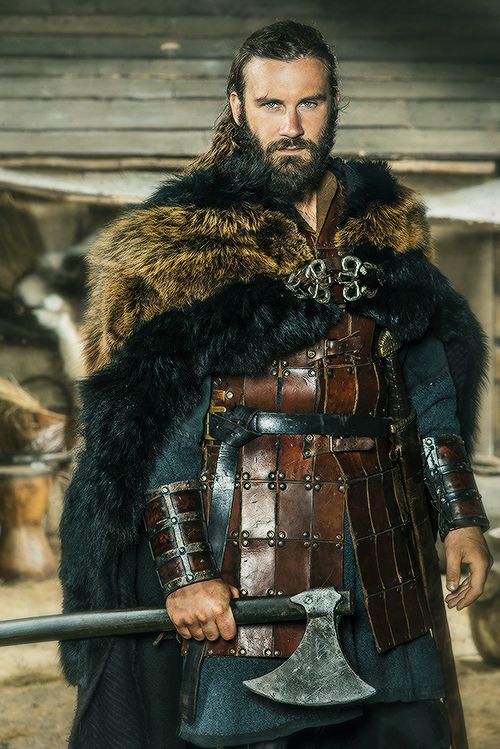
Rollo embodies this convergence of sexuality, violence, and belief. He is the show’s most openly conflicted man – simultaneously brutal and insecure, seducer and supplicant, forever craving legitimacy.
His story arc – from warrior in Ragnar’s shadow to Duke of Normandy – dramatises the erotic politics of conversion and assimilation. When Rollo betrays his brother and accepts baptism in Frankia, the scene is filmed not as spiritual submission but as erotic transformation. His body, drenched in water and lit by candlelight, becomes a site of theological theatre. Faith here is not conviction but costume – a surface to be worn, desired, and doubted.
The camera frames Rollo’s muscularity as a visual analogue for sincerity: his body performs belief before his mind can. This is the logic of Vikings at large – religion as spectacle, redemption as sensuality. Rollo’s conversion seduces the viewer because it promises coherence through physical surrender. It eroticises the idea of being remade.
Even his relationship with Gisla, the Frankish princess he marries, plays out as a literalisation of the cross-cultural fantasy the show sells to its audience. Their marriage is not just personal but civilisational: pagan passion meets Christian order. The sexual tension between them stages a broader negotiation between chaos and civilisation, between desire and discipline. Rollo’s body becomes the frontier through which two cultural theologies touch.
Through him, Vikings articulates one of its most persistent fantasies: that history itself is erotic, a drama of submission and conquest enacted on the flesh.
The Erotics of Authenticity
What Vikings sells is a fantasy of coherence – a world where power, beauty, and belief all align. Its appeal lies not in accuracy, but in conviction.
The camera fetishises texture: fur, sweat, timber, blood. This tactility functions as a kind of pseudo-evidence. Viewers don’t just see the past; they feel it. It’s history rendered as sensory immersion, where authenticity becomes something you can almost touch.
This desire for embodied authenticity runs through modern medievalism – in reenactment culture, fantasy gaming, and the branding of “heritage” itself. The medieval past becomes a zone of affective escape from modern abstraction. What we crave, perhaps, is the fantasy of a world not yet mediated – a world where action and meaning coincide.
The Capitalism of Desire
The longing for authenticity doesn’t resist capitalism – it sustains it.
Vikings sells the ache for meaning as an aesthetic. Its world of rough wood, raw emotion, and ritual violence has become a global brand of prestige grit – the visual language of sincerity. The medieval past, once the territory of historians, now circulates as lifestyle media: a curated fantasy of texture and conviction, designed for consumption.
From the catwalk to the screen, authenticity functions as entertainment. The same aesthetic principles that shape luxury fashion shape Vikings. Compare a still of Katheryn Winnick as Lagertha – leather, fur, braided hair, eyes rimmed with battlefield dust – to a catwalk photograph of Dutch model Doutzen Kroes: windblown, fierce, “natural.” Both stage the same fantasy of primal power, both sell an image of purity through performance. One walks a runway, the other rides into battle, but the logic is identical – the performance of authenticity as spectacle.
This is the capitalism of desire. What we crave in Vikings is not history but feeling: the illusion of intensity in a flattened age. The show’s textures – fur, flame, blood, steel – offer tactile resistance to the smoothness of digital life. But this resistance is already commodified. “Roughness” has become a brand, a visual shorthand for sincerity. The camera doesn’t expose violence or faith; it stylises them into mood.
Like fashion photography, Vikings transforms conviction into surface. Its dirt is deliberate; its blood, art-directed. Every frame promises contact with something ancient, but it’s a contact mediated by design. The show offers history as an affective commodity: the feeling of depth without the risk of discomfort.
Streaming culture has perfected this economy. Netflix and Amazon don’t just distribute Vikings – they market its vibe. Bingeing becomes a form of consumption akin to fashion scrolling: endless, aesthetic, emotionally charged but frictionless. We no longer seek knowledge of the past; we curate its atmosphere.
Our desire for the medieval is shaped by the same system that erases it. The more we consume authenticity, the less authentic it becomes. We buy conviction in pixels, belief as body, and sincerity as a lighting effect.
The result is a kind of aesthetic capitalism of faith – a market in meaning. Vikings doesn’t challenge it; it performs it perfectly. We stream belief, binge devotion, and call it history.
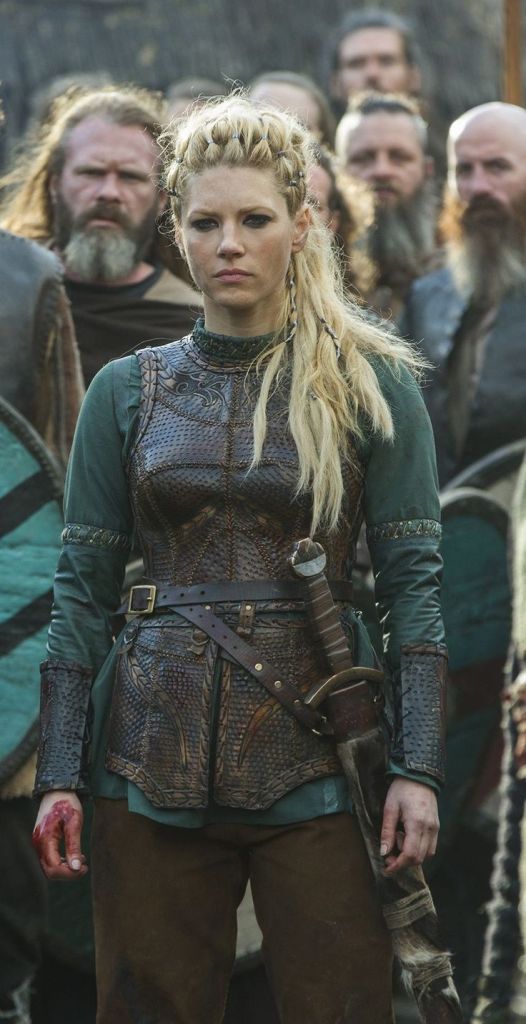
Kathryn Winnick as Character Lagertha
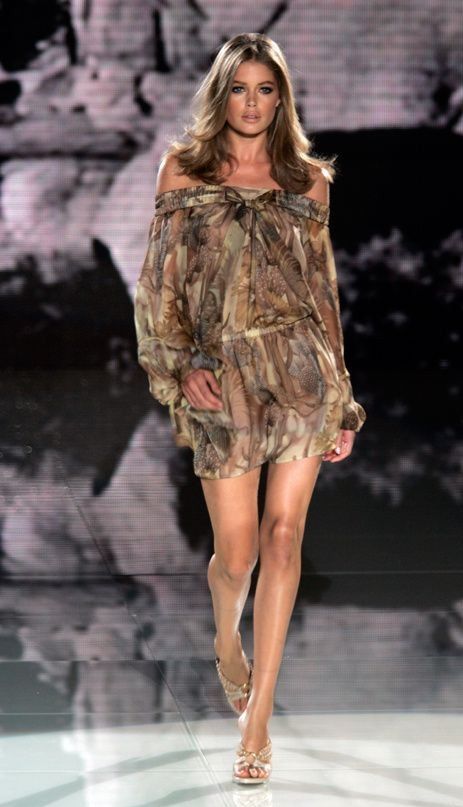
Dutch Model Doutzen Kroes
The Erotics of Looking
In the end, Vikings doesn’t simply dramatise the medieval; it dramatises our hunger for it. The show gives form to the emotional economies of modern spectatorship – the desire to feel something real in an age that makes feeling difficult. Its bodies, battles, and baptisms all perform the fantasy that meaning can still be physical.
To be “horny for history” is to long for coherence – for conviction that looks beautiful, for a world where violence feels purposeful and faith leaves marks. Vikings gives us that coherence as performance: conviction staged, lit, and soundtracked for maximum affect. We don’t watch for truth, but for texture – for the sensory illusion that belief and beauty might still coincide.
But to notice that desire is not to condemn it. Our fascination with Vikings reveals how historical imagination survives – not in archives alone, but in longing. The medieval past becomes a mirror for modern appetites: for faith, for agency, for meaning that can be seen and touched.
Perhaps that’s the real seduction of Vikings. It makes wanting – even our most aesthetic, performative wanting – look like belief.
Want to Read More?
- Carolyn Dinshaw, Getting Medieval: Sexualities and Communities, Pre- and Postmodern (Duke University Press, 1999).
Andrew Elliott, Remaking the Middle Ages: The Methods of Cinema and History in Portraying the Medieval World (McFarland, 2010).
 Medieval Letters
Leave a comment