
13 minutes
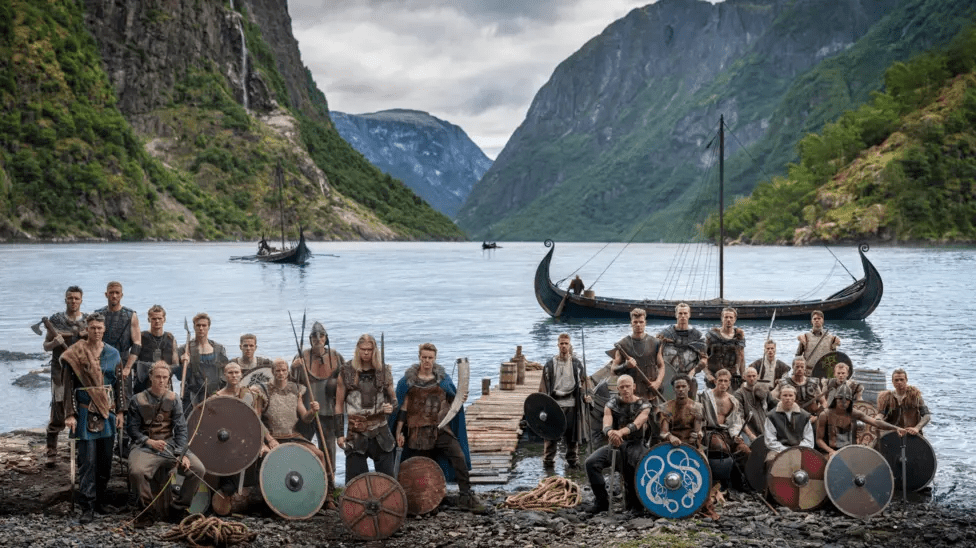
There is a particular photograph from June 2026 that captures something essential about our cultural moment. Ahead of their first World Cup appearance in nearly three decades, the Norwegian men’s football team released an official squad portrait titled “The Vikings are Coming.” Captured by acclaimed British photographer David Yarrow, the image features Erling Haaland and his 25 teammates standing on a rugged fjord shore clad in theatrical Viking attire: swords, shields, chainmail, and fur-trimmed leather.
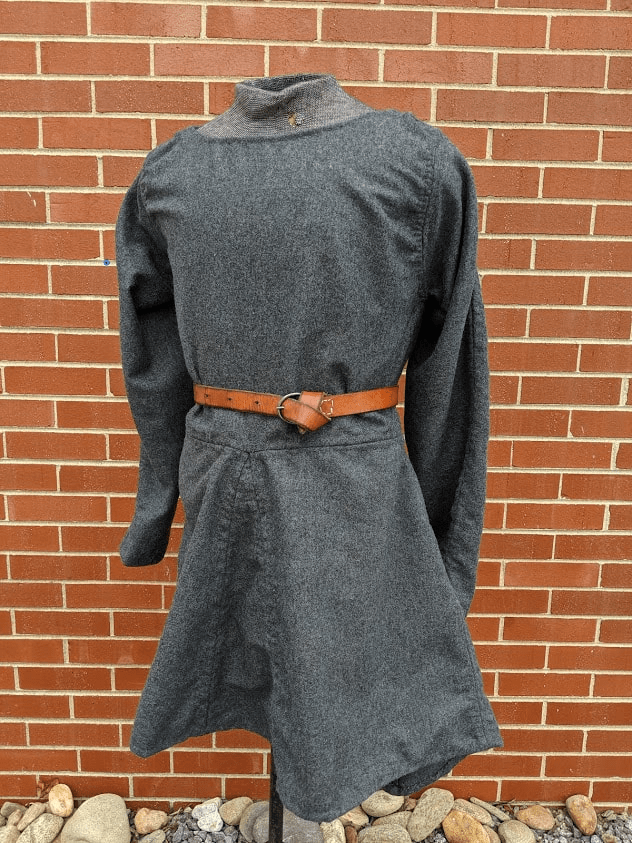
The image is magnificent, cinematic, and entirely fake in its historical styling. Jóhanna Katrín Friðriksdóttir, a medieval specialist at the National Library of Iceland, has observed that authentic Viking clothing was made of bright-coloured wool and linen, with silk trimmings for the wealthy. “I don’t think we’d have looked on the national team as being so strong and manly if they were dressed in what the Vikings actually wore,” she noted. The Viking aesthetic, she concluded, “is a mashup of everything possible, but is least of all based on real Viking finds.”
This article is about that mashup: about why Norse imagery has become the default visual language for masculinity, freedom, authenticity, and “warrior culture” in the twenty-first century; about what that language actually encodes; and about the gap between the Viking as history and the Viking as fantasy. It is an argument that the modern Viking is not a historical figure but a cultural Rorschach test. What people see when they look at Vikings reveals more about contemporary anxieties around gender, race, and identity than it does about the 8th to 11th centuries. The word “Viking,” as Tom Birkett has argued in The Vikings Reimagined, “has become such a malleable word that it has morphed into a notion with a life and a reality of its own.” That malleability is worth unpacking.
The Invention of the Viking
The Viking was invented before it was remembered. The word itself, in Old Norse, referred to an activity (going on a raid, í víking) rather than an identity. In medieval sources, it is used sparingly and always in connection with seafaring and violence; it is not a term for an entire civilisation. The transformation of “Viking” from a verb into a noun, and from a noun into a brand, is a modern project with three crucial phases.
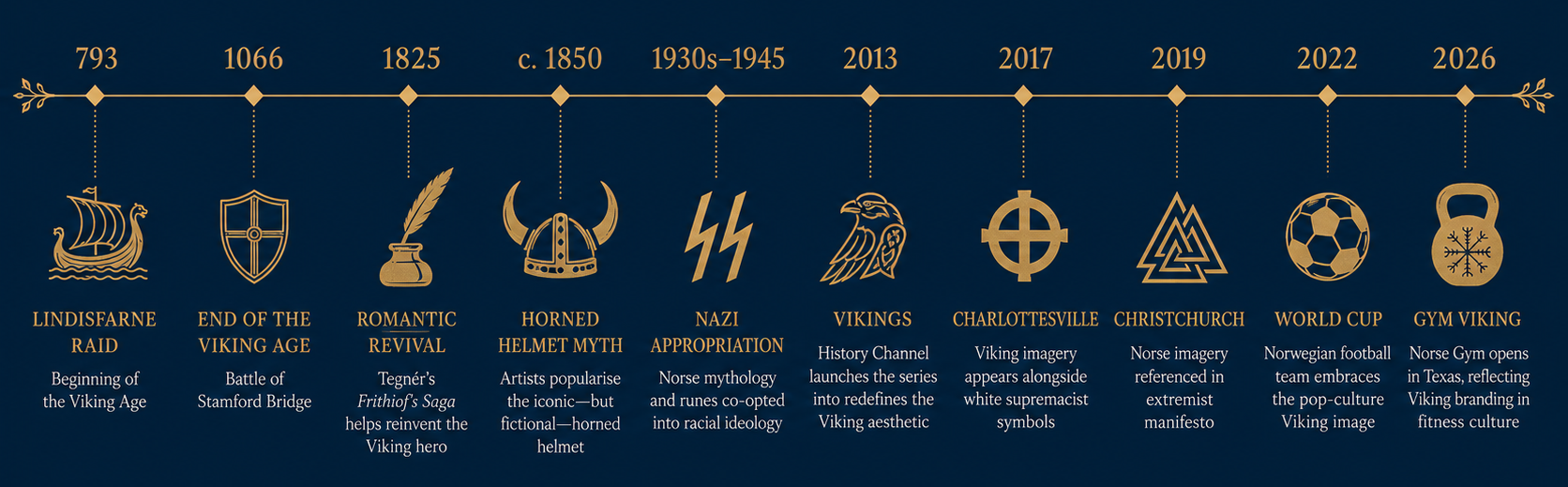
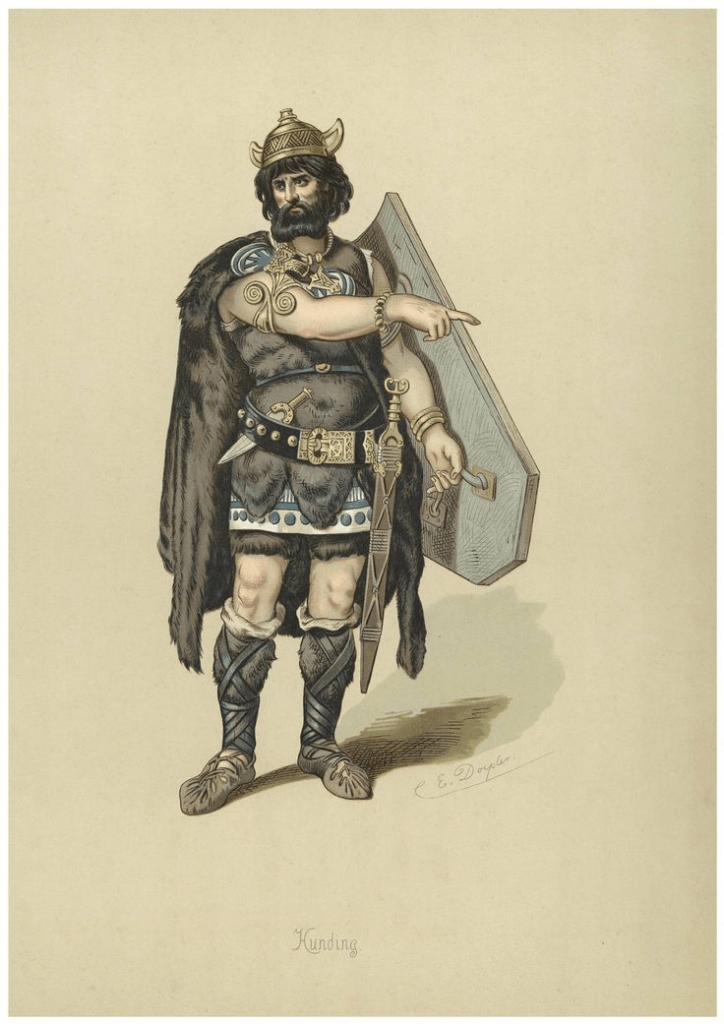
The first was the Romantic Revival of the 1820s to 1850s. European nationalism needed ancestral heroes. The French had the Celts, the Germans had the Teutons, and the Scandinavians had the Vikings. Danish scholars, Swedish poets, and British imperialists each constructed a Viking that served their political project. The Swedish poet Esaias Tegnér, in his 1825 epic Frithiof’s Saga, created a Norse hero who was “honourable, noble, brave,” a man who “stands out not only for being an audacious warrior, but for being a man who has a love for ladies and their virtues.” This figure was, in effect, a medieval knight in Viking dress: chivalric, courtly, and thoroughly Romantic. It was also in this period that artists, drawing on literary stereotypes and the imagery of medieval chivalry, invented the horned helmet, which no actual Viking ever wore.
The definitive crystallisation of this look arrived with Carl Emil Doepler the Elder. His 1876 costume designs for Richard Wagner’s Die Walküre at the inaugural Bayreuth Festival – most notably Hunding’s horned helmet–cemented the visual template for the stage . Despite having zero basis in actual Viking Age archaeology, Doepler’s operatic styling migrated from the theatre directly into popular imagination, proving that audiences prefer a theatrical lie that looks the part over historical truth.
The second phase was Victorian Anglo-Saxonism. In nineteenth-century Britain and America, the Viking was reborn as a proto-democrat: a self-reliant, individualistic adventurer whose values conveniently mirrored those of the industrial West. Victorians drew parallels between their “New Man” and the Vikings of the past, the “perfectors of individualistic lifestyles.” This established a template that has proved remarkably durable: the imagined Viking was blonde, hypermasculine, heterosexual, and white.
The third phase, and the most ideologically dangerous, was Nazi co-optation. The architects of Nazism erroneously viewed Norse mythology preserved in Iceland as a repository of “Germanic” culture and values. They plundered pre-Christian imagery for the iconography of the Third Reich: SS divisions were named “Wiking” and “Nordland,” runes were adopted as insignia, and Richard Wagner’s operatic cycle Der Ring des Nibelungen provided a soundtrack for racial mythology. This genealogy matters because it explains why Viking imagery carries such charged ideological baggage today. The symbols were never neutral; they have been recruited into projects of racial supremacy at least since the nineteenth century.
The Television Viking
If the nineteenth century invented the Viking and the twentieth century weaponised him, the twenty-first century has made him sexy.
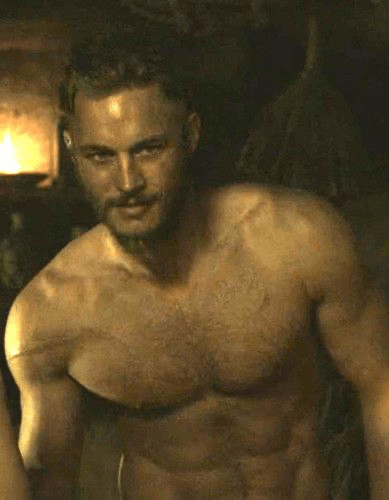
The History Channel’s Vikings (2013-2020) was the watershed. Created by Michael Hirst, the show followed the legendary Ragnar Lothbrok from farmer to king, blending saga material with historical events in a way that was neither faithful adaptation nor straightforward history but something new: a mythic narrative told with the visual grammar of prestige television. Hirst himself has been candid about his intentions. “If you’re writing drama, you’re not interested in whether something is accurate,” he said in an interview. “You’re interested in whether something is true.”
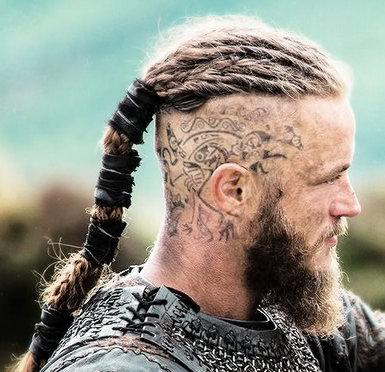
The show created a visual archetype: Ragnar Lothbrok with his shaved sides and intricate tattoos, his leather-and-fur wardrobe, his thousand-yard stare. This aesthetic, which had almost nothing to do with actual Viking material culture, became the template for an entire industry of “Viking” style.
The Norwegian textile scholar Friðriksdóttir has pointed out that the real look owed more to punk and biker subculture than to archaeology. But historical accuracy was beside the point. What the show sold was a feeling: the feeling of being raw, untamed, free from the constraints of modern civilisation.
A Swedish thesis on Viking imagery in Anglophone fantasy literature found something striking: the fantasy Viking “has developed in ways that seemingly take into account feminist and queer critique of traditional masculinity, transforming the Viking and offering it up for (queer) objectification.” Ragnar’s bare torso, Lagertha’s shieldmaiden physique, the lingering camera on bodies in motion: these are not simply reproductions of old stereotypes. They are a new kind of commodity, repackaged for a culture that has learned to consume historical masculinity as spectacle while congratulating itself on its progressive gender politics.
The Gym Viking
The Viking has also conquered the fitness industry, and here the commodification is even more explicit.
A 2023 Scandinavian study documented how “images of the Vikings have inspired the development of new approaches in the international fitness training sector as well as fitness influencers in re-enactment environments.” The researchers argued that the modern Viking fitness trend “contains elements of Vitalism, Darwinism, Romanticism and Muscular Christianity,” a cocktail of nineteenth-century ideological traditions dressed up in Norse packaging.
The Viking has also conquered the fitness industry, and here the commodification is explicit. Online fitness brands and high-end regimens like Svava Sigbertsdottir’s “The Viking Method” – popularised by celebrities like Nicole Scherzinger and Amanda Holden – promise to unlock warrior resilience through functional movements, crawling drills, and high-intensity bursts. On social media, fitness accounts like @vikingpower83 on Instagram fuse this aesthetic with heavy compound lifting, captioning deadlifts and squats with demands to “emulate the legendary berserkers” and unlock your inner chieftain. A 2023 Scandinavian study documented how these modern Viking fitness trends integrate elements of Vitalism, Darwinism, and Romanticism, dressing up twenty-first-century wellness culture in Norse packaging . The logic is appealingly simple: Vikings were strong, you want to be strong, therefore train like a Viking.
The irony is that masculinity in Old Norse literature was far more complex. The Hávamál, one of the most important poems in the Eddic tradition, repeatedly counsels moderation, self-control, and civic spirit. “The ideal man in Viking Age Scandinavia was not the hairy, individualistic barbarian of popular culture,” Dr Roderick Dale has argued, “but moderation and self-control as well as courage and a sense of civic spirit were idealised traits.” Poetic composition, legal skill, and the ability to navigate social relationships were as central to saga masculinity as swordplay. The gym Viking erases all of this in favour of a deadlift and a beard.
The Tattoo, the Axe, and the Algorithm
Online, the Viking aesthetic has become a visual lingua franca for a particular kind of aspirational masculinity. Runes, the Helm of Awe, Yggdrasil, bearded men holding axes: these images circulate on Instagram, TikTok, and YouTube as shorthand for toughness and authenticity.
The phrase “I will see you in Valhalla” (or its military variant “Til Valhalla“) has evolved into a ubiquitous modern shorthand for masculine bravado, migrating from a Norwegian military battle cry in Afghanistan into veteran memorial communities, gym culture, and, chillingly, the manifestos of modern far-right mass shooters. Yet the historical reality of Valhalla was radically exclusive. In Old Norse mythology, Odin’s hall of the slain was not a universal heaven for all who died, but a specialized destination reserved strictly for a warrior elite chosen after falling in combat. By treating Valhalla as an accessible democratic promise, modern internet culture strips away its ancient elite constraints—transforming an aristocratic pagan warrior theology into a mass-market slogan that looks great on a t-shirt, even if the historical 99% of Viking Age farmers, traders, and craftspeople would have had entirely different funerary expectations.
The Darker Side
This article is not arguing that everyone who wears a Thor’s hammer necklace or does a Viking workout is flirting with fascism. That would be absurd. But it would be equally dishonest to ignore the fact that Norse imagery has been systematically appropriated by extremist movements.
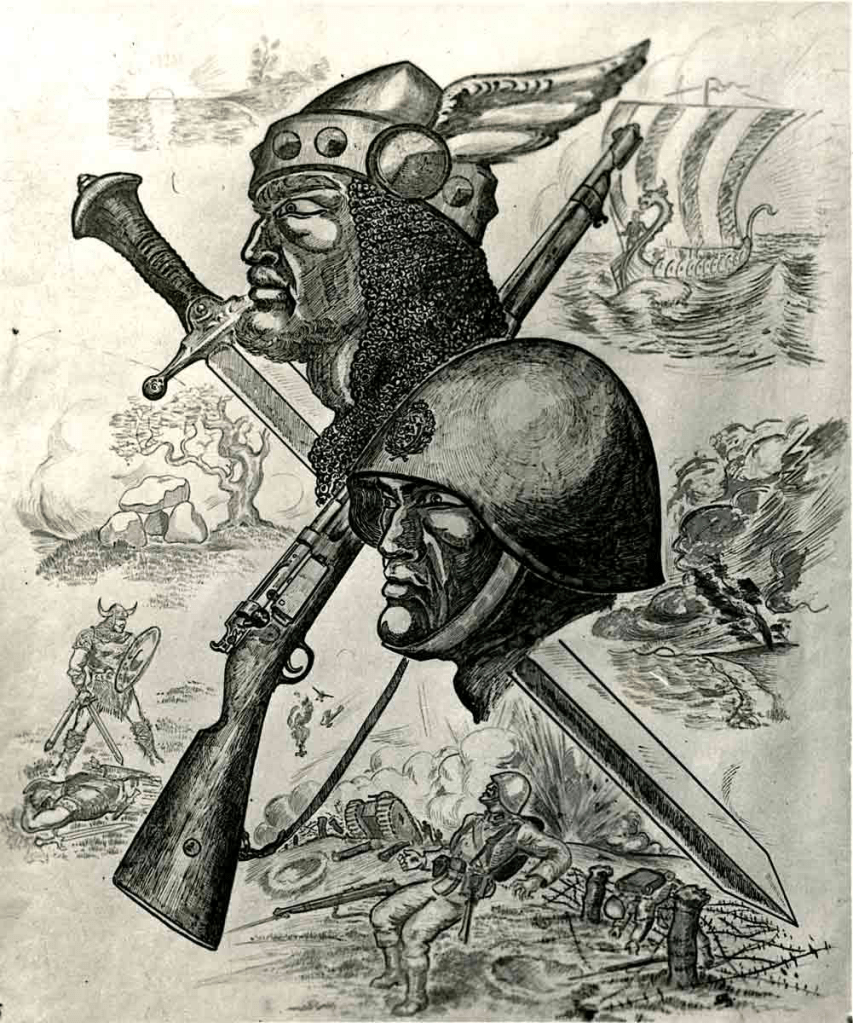
The Nazis adopted Norse runes and mythology as part of a deliberate strategy to construct a mythic white warrior past. SS divisions were named “Wiking” and “Nordland”; runes were used as insignia; and völkisch ideology drew explicitly on Germanic tribal history to legitimise racial hierarchy. Georg Schuppener’s study on right-wing extremism found that references to Germanic history and mythology are even more widespread among contemporary right-wing extremists than they were in the interwar National Socialist era.
The contemporary evidence is unambiguous. The Christchurch shooter’s manifesto in 2019 was filled with Norse references, and the Buffalo shooter in 2022 ended his with a reference to Valhalla. At the 2017 Unite the Right rally in Charlottesville, Norse runes appeared alongside swastikas and KKK insignia. Research from the Global Network on Extremism and Technology has documented how Viking medievalism is weaponised within video games and online memes to endorse white supremacy, promoting the fiction of an all-white Viking past.
The historical Vikings were traders, migrants, and cultural adapters who settled from Newfoundland to Constantinople, intermarried locally, and left genetic and cultural traces across a vast geographic range. The idea of the Viking as a pure white warrior untouched by multicultural contact is not history. It is political mythology.
So Which Viking Are We Talking About?
The Viking has become a screen onto which different groups project different desires. For fitness, it is a brand of functional masculinity. For television, it is the morally complex antihero. For online culture, it is a signifier of rugged individualism. For extremists, it is a mythic white past that never existed. And for actual Norse scholars, it is a reminder that the real Viking Age was messy, commercially savvy, and far stranger than any of these projections.
The gap between the imagined Viking and the historical one is not innocent. It is a space where real ideological work happens. When a fitness brand sells “Berserker Strength Training” or a creator captions a deadlift with Valhalla, they are drawing on a century and a half of accumulated meaning that connects the Romantic Viking, the Nazi Viking, and the internet Viking in an unbroken chain of projection.
Understanding that substitution matters because myths shape values. True courage in the Viking Age was often about survival: keeping a farm going through a brutal winter, navigating an unknown ocean by the stars, or composing a sharp poem. That kind of courage does not look good on a t-shirt. But it is what actually built the Norse world.
Bibliography & Further Reading
- Birkett, Tom, ed. The Vikings Reimagined: Reception, Recovery, Engagement. London: Arc Humanities Press, 2020.
- Dale, Roderick. “It’s Reigning Men: The Use and Abuse of Viking Masculinity.” Berserkjablogg, 2019.
- Melton, Zachary J. “An Excuse for Violence: The Viking Image, Race, and Masculinity in U.S. Popular Culture.” PhD diss., University of Iceland, 2023.
- Schuppener, Georg. The Germanic Tribes, the Gods and the German Far Right Today. London: Routledge, 2021.
- von Schnurbein, Stefanie. Norse Revival: Transformations of Germanic Paganism. Leiden: Brill, 2016.

